In terms of box office appeal, the inclusion of music by Australian composers has long been a contentious issue. To see the latest Melbourne Symphony Orchestra program billed as “Strauss’ Alpine Symphony, Debussy and Sutherland” – exactly the reverse order in which these works were played – suggests that we still have some way to go in giving our own creators of classical music their due.
To be fair, the pre-concert talks focused on the work of Margaret Sutherland as Cybec Assistant Conductor Fellow Carlo Antonioli spoke with the eloquent writer, editor and researcher Dr Jillian Graham, who has just published Inner Song, a book about this neglected composer. Sutherland had the double disadvantage of being both an Australian and a woman. But things are improving. While there is still a preponderance of dead white males in this year’s programming, Mary Finsterer’s role of 2023 Composer in Residence and a performance of Deborah Cheetham Fraillon’s Eumeralla go a substantial way to redressing the balance. We have certainly come a long way from the opening of Hamer Hall in 1982 with a program that included no Australian music.
What was most impressive in this concert was Jaime Martín’s championing of Sutherland’s Haunted Hills. In a lengthy introduction to the work, he acknowledged the difficulties she faced, her visionary ambitions for music in Melbourne and her advocacy of New Music. He also enthused about the quality of the work and congratulated the MSO librarian Luke Speedy-Hutton for preparing a “beautiful new edition” from a facsimile of the manuscript – essential work for what he hopes will many future performances. He ended by dedicating the performance to Sutherland’s grandson Tony, who was in the audience.
A 15-minute work, Haunted Hills (1950) is, in her words, “a sound picture written in contemplation of the first people who roamed the hills, their bewilderment and their betrayal” leading to a “frenzied dance, its seeming gaiety born of despair”. According to Dr Graham, Sutherland was generally against programmatic titles but made an exception in this case. It arose from her appreciation of the beauties of the Dandenong Ranges and the plight of the traditional owners – the Wurundjeri people. Haunted Hills begins on a strikingly different note from the gentle Acknowledgement of Country that generally prefaces MSO concerts. Whereas Cheetham Fraillon’s work is a gently melodic piece for string quartet overlaid by a short text spoken by a member of the orchestra, Sutherland’s work begins on a rising shriek. This is followed by a weighty, almost sultry, rhythm as low woodwinds, strings and then sonorous brass join in, suggesting the Wurundjeri. A sparser section reflects the bewilderment of the people, with a soft flute and tiptoeing strings leading to the “frenzied dance”. A trumpet solo with interleaved harp glissandos, then a delicately mourning solo violin culminate in a tremendous climax featuring angry trombones that are soon replaced by receding string pizzicatos. A work replete with colour and musical interest, it was greeted with prolonged applause as Martín held his conductor’s score triumphantly aloft.
This performance of Debussy’s Ariettes Oubliées (Forgotten Words) was also notable for its Australian creative input. Brett Dean’s 2015 orchestral arrangement for Magdalena Kožená, Simon Rattle and the Australian World Orchestra was not heard in Melbourne due to her illness, so it was an extra pleasure to finally hear it – and with our own superstar soprano, Siobhan Stagg. Those who heard her sing the principal soprano role in Pelléas et Mélisande with Victorian Opera know how ideally suited she is to Debussy’s musical language. Using an economy of means, often with snatches of colour from solo instruments, mostly between Verlaine’s verses, Dean’s arrangement is also in complete sympathy with the contrasting moods created by Debussy in these six extraordinary songs.
If you want someone who can convey a thrilling sense of rapture, then Stagg would be your singer of choice. From the sensuous opening of “C’est l’extase langoureuse” to the melancholy “Il pleure dans mon coeur” with its bassoon introduction and solo violin interpolations; to an atmospherically brooding “L’ombre des arbres”, cushioned by soft brass and lower strings; to joyous horns announcing the animated beginning, and completing the nostalgic final verse of “Chevaux de bois”; to a whirlwind of flutes for “Green”; to the final exquisitely expressive “Spleen” with its soft flutes and harps, Stagg’s ability to create a sense of the mysterious and otherworldliness was remarkable. Her command of vocal colour, breath control, commitment to the meaning of the text with appropriately expressive use of gesture, and her ability to produce an effortless, soft B-flat in “Spleen” – pitch perfect and velvety – were all part of her extensive artistic palette.
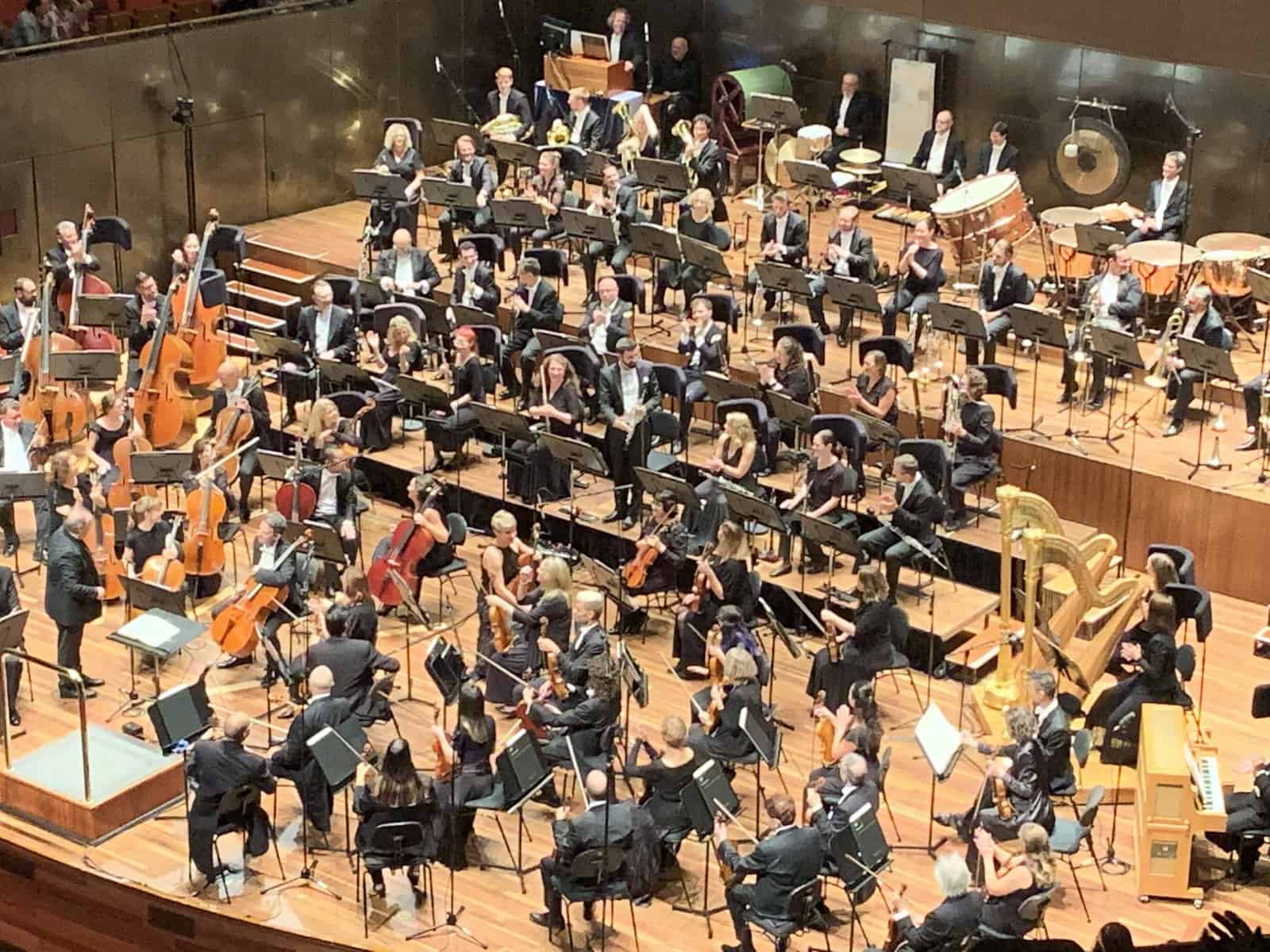
Just as the complete symphonies of Mahler seem to figure on many conductor’s bucket list (Martín conducted a splendid performance of No. 5 last week and has No. 7 scheduled for later this year), so Richard Strauss’s big tone poems tend to hold an important place on that list. This concert may have begun with a relatively modest “Hill”, but the 50-minute An Alpine Symphony requires huge forces (137 players) to scale and descend the monumental heights. As in many of his works, Strauss has extended passages in which these forces are drastically reduced, making the moments when full orchestral might is unleashed all the more powerful. The famous storm scene with its wind machine, thunder sheet, timpani and drums is a case in point. The MSO players were in great form overall, with Johannes Grosso taking the solo honours for his expressive oboe playing after the climbers reach the summit. Each section seems to have its moment in the sun in this work, but percussion, brass (including nine horns, led by the superb Nicolas Fleury), flutes and leading string players were outstanding in what was an exciting performance.
Image courtesy Classic Melbourne
____________________________________________________________________________________
Heather Leviston reviewed the Melbourne Symphony Orchestra’s performance of “Strauss’ Alpine Symphony, Debussy and Sutherland” presented at Arts Centre Melbourne, Hamer Hall on March 3, 2023.