For a string quartet, it’s all about chemistry; and the longer a group plays together, the tighter the bond.
So, how does a quartet cope with an unanticipated absence mid-tour? In its stride, if the quartet is the Australian String Quartet (ASQ), and the substitute is Melbourne-based violinist/violist Jenny Khafagi. During the ASQ’s “Interwoven” tour, Khafagi was called upon to replace second violinist Francesca Hiew at short notice, and she nailed it.
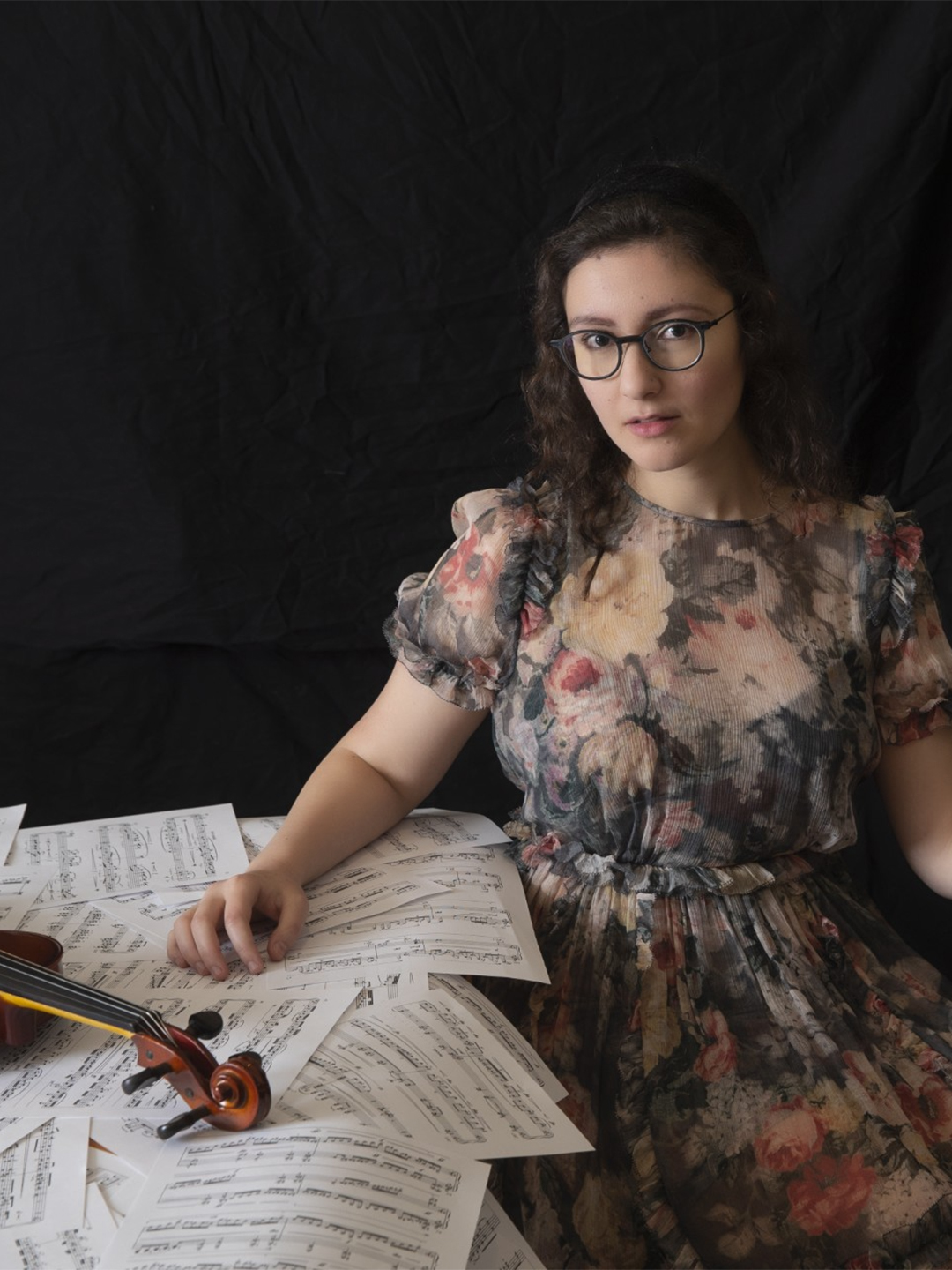
The program was intentionally eclectic. It opened with Interwoven, the first string quartet by Elizabeth Younan, an Australian composer currently undertaking a doctorate at Juilliard. Ahead of the ASQ’s “Interwoven” tour, Younan posted that she likes to take small musical ideas and allow them to “grow, transform and interconnect”.
Each of Interwoven’s three movements began with an arresting moment. The first movement, “Brooding”, opened with a truly dark, soulful motif reminiscent of Shostakovich. The motif expanded and contracted, with devices such as pauses and pizzicato used to create and dissipate tension. The original motif compounded in volume, intensity and pitch until ultimately the four parts coalesced, blazing forth in unison.
The second movement, marked “Darkly”, was particularly atmospheric. It opened with a slow, reflective, almost mournful duet between the viola and cello. As it evolved, it rose in pitch, peaking in an exquisite violin solo which, in turn, led into another, more mobile theme. The ASQ created and sustained a deep meditative, trance-like concentration throughout this beautiful movement. The third movement was marked “Vivacious”, but had an intense, almost manic vitality. The opening movement’s bleakness had gone; the ending was exultant.
A bubbly quartet by Haydn (Op. 20 No. 6 in A major) was the perfect segue. This mature work from Haydn’s “middle period” had all the trademark features: a bright, fast-moving first movement; a lyrical and expansive slow movement; a graceful minuet and trio; and an action-packed fugue. A highlight of ASQ’s interpretation was the consistently supportive accompaniment, which anchored the music without cramping it.
Prokofiev wrote his second string quartet (Op. 92) during the war, after being evacuated to the Georgian town of Nalchik, where he was exposed to the local Kabardian culture. The whole quartet is infused with folk melodies and rhythms, which Prokofiev fashions into three highly-charged, atmospheric movements. The first, based on a march, swung between a stomping, heavy theme and a lighter, more frolicsome one.
The second movement, based on a love song, featured a tender, searingly beautiful principal theme, into which Prokofiev had woven a delicate oscillating accompaniment. Every nuance of the ASQ’s delicate interpretation could be appreciated, thanks to the acoustics in Elisabeth Murdoch Hall.
The third movement was intense. While also based on a folk dance, this iteration of the dance was by no means simple. This movement started with a lively, energetic motif, but took several unusual turns, as intense, compulsive movement gave way to more dramatic, exclamatory moments. It was an exhilarating conclusion to a nuanced performance.
The concert closed with what the ASQ described as a “sweet treat”: Clara Schumann’s Variations on a Theme by Robert Schumann (Op. 20) arranged for string quartet by Éric Mouret. Robert Schumann had presented Clara with the album Bunte Blätter (Coloured Leaves) on their wedding day. Thirteen years later, Clara presented Robert with a set of variations for solo piano based on the fourth theme, Albumblätter 1, for his birthday.
The theme itself is a charming, lyrical air. The variations depict a range of moods: the opening variation is buoyant and joyous; then there’s a pensive chorale, and a rather fiery climax, where the four parts seem to become (intentionally) tangled up. The finale is full of contrasts, with cascading filigree passages, a sonorous violin solo from the depths of the instrument and delicately placed pizzicato effects. The familiar genre and nineteenth century harmonies would have exposed any disconnect between the four players; instead, this performance highlighted the extent to which Khafagi had succeeded in blending with the ASQ to give a polished performance of this rarely played gem.
Photo: Eizabeth Youman composer. Photo credit: Louie Douvie
_________________________________________________________
Sue Kaufmann reviewed “Interwoven”, performed by the Australian String Quartet at the Melbourne Recital Centre on May 21, 2026.