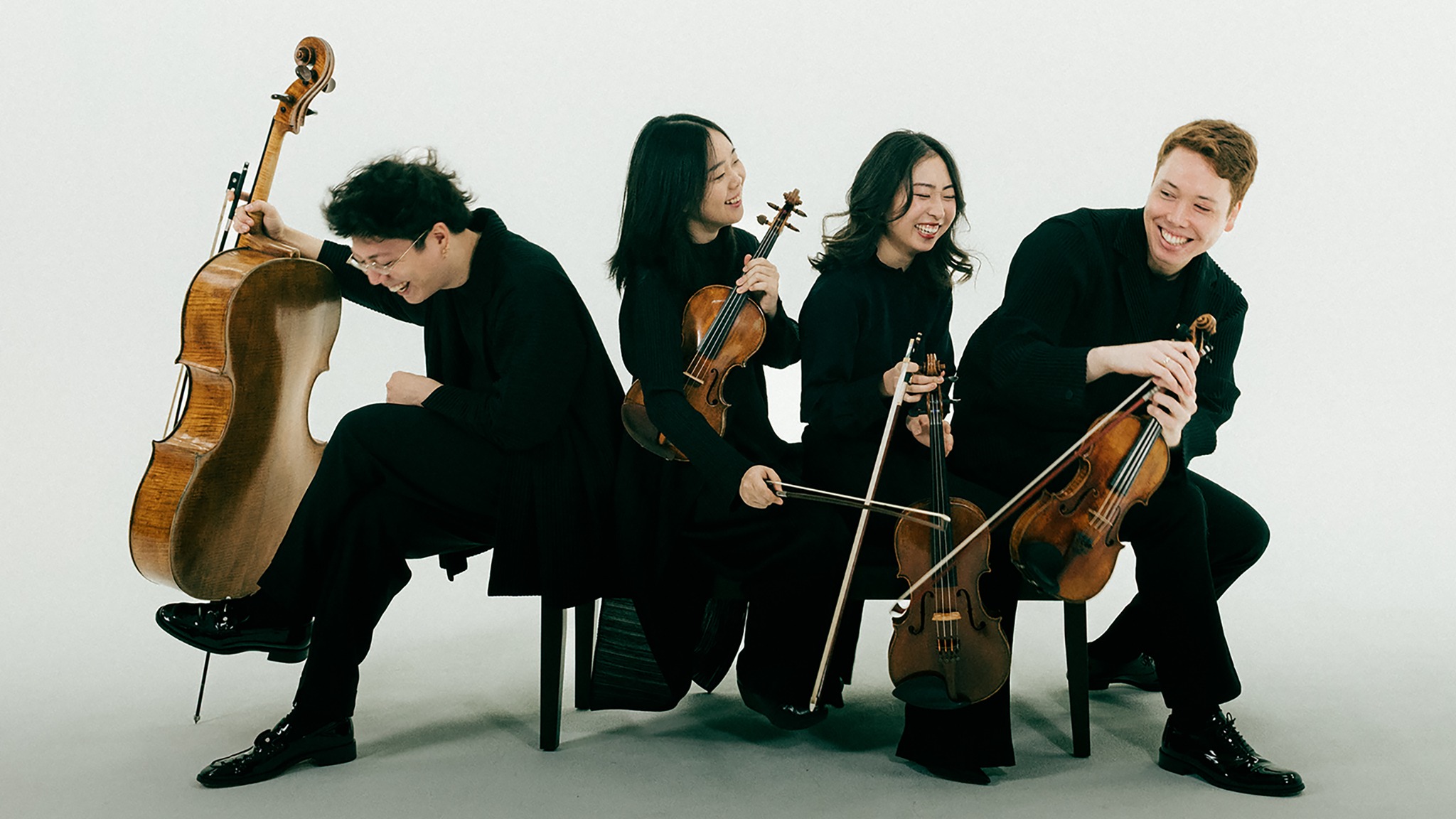
A disappointingly small, but greatly appreciative, audience was treated to an outstanding concert by one of the biggest names in young European string quartets. By the way, the name – Esperanto for “Lionheart” – refers to a children’s tale of brotherly support, not the English king from a highly dysfunctional family. While only two of the quartet are actual brothers, all four display that special balance of individuality and collective identity which the best quartets possess. In many ways they are heirs to the traditions of some of the best-loved twentieth-century quartets: warmth and passion in slow movements, expressive refinements in tone colour, and focus on details of phrasing. The major point of difference is that Leonkoro prefer tempi on the faster side. Whether this is youthful vigour, a general trend at present, or simply taking composers at their word, I am not sure – perhaps a bit of all three.
The opening work was the 1927 String Quartet by Henriëtte Bosmans, a composer who is belatedly becoming better known outside her native Netherlands. The textures were often reminiscent of Debussy and Ravel, highlighted by Leonkoro’s exquisitely refined playing, but the thematic development was quite individual.
Mendelssohn’s Quartet No. 2, Op. 13 presents different challenges to performers from most of his chamber works. The eighteen-year-old Felix has been looking into Beethoven’s late quartets (which few musicians at the time did) and does his best to respond seriously. Of course, precocious as he was, he could only get so far, but Leonkoro made a very persuasive case for what he did achieve. If their tempi were faster than usual, it is certainly arguably that that is what the composer implies by “non lento”, “con moto” and “di molto”. That last one, in the Trio of the Intermezzo, was a virtuosic display of ensemble rapid staccato articulation.
The major work was Schubert’s “Death and the Maiden”, a work where, ironically, youthful vigour is rarely out of place. The first movement had all the rhythmic drive you could want, the relentless triplets always making themselves felt. Perhaps a little more could have been made of the closing ritardando, but that’s just a personal taste. The eponymous Andante con moto was certainly more “con moto” than it often is, but with the figuration so deftly articulated it saved the movement from a tendency to drag. The Scherzo was spot on, plenty of bite but none of the leaden feet one sometimes hears. When it came to the Tarantella-like Presto Finale, when they began I thought we were in for a wild ride, and awaited the final Prestissimo with some trepidation. As it played out, it was indeed a wild ride, but always in control, even at its aptly death-defying conclusion.
This might be the first time you’ve heard of the Leonkoro Quartet; it won’t be the last.
Photo supplied.
_________________________________________________________
Richard Excell reviewed the recital by the Leonkoro Quartet “Bosmans, Mendelssohn, Schubert”, presented by the Melbourne Recital Centre at the Elisabeth Murdoch Hall on May 4, 2026.