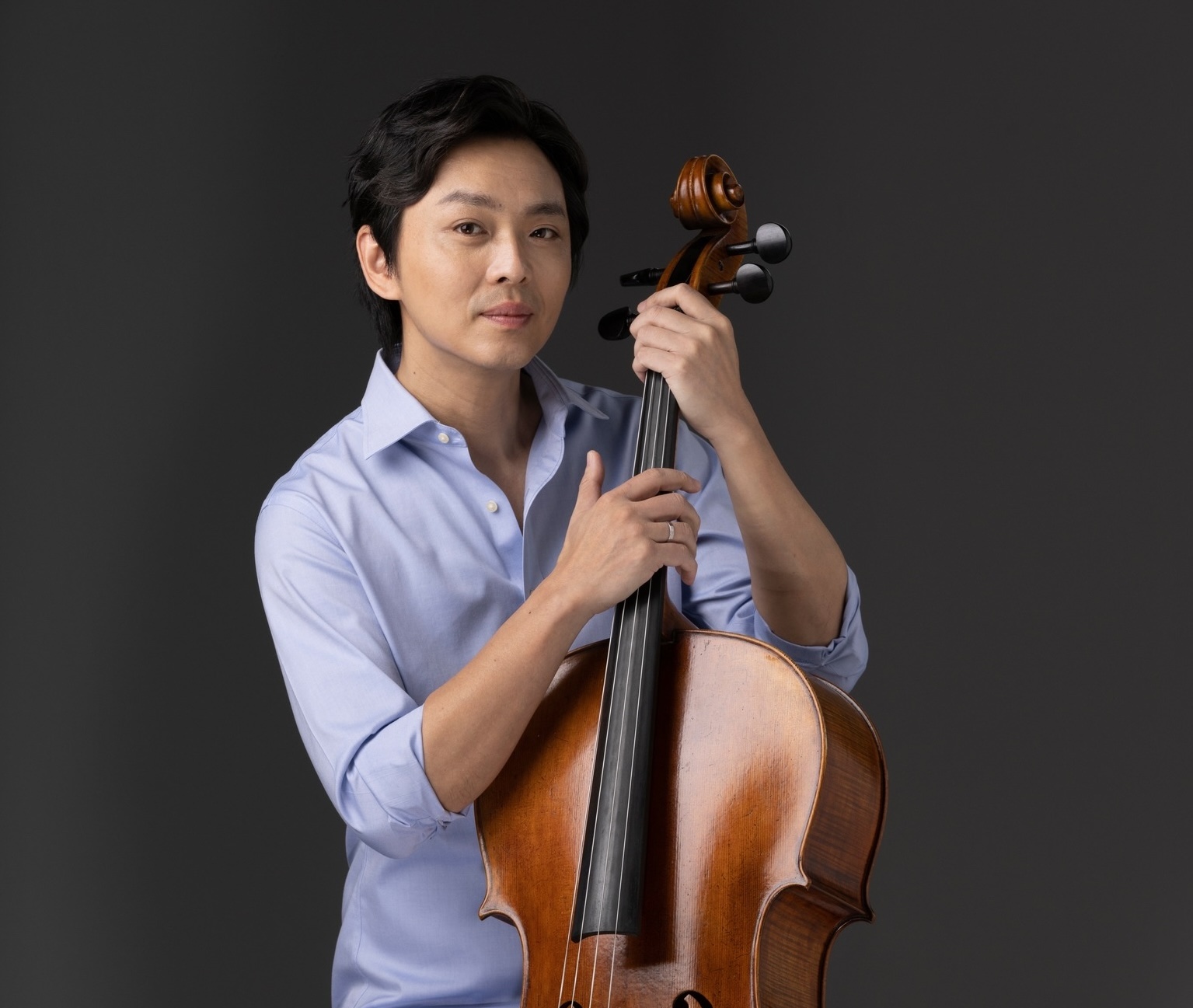
“Musette” was (almost) all about the cello.
The opening work – and the only one not for or by a cellist – was a re-imagining of six pieces “From Anna Magdalena Bach’s Notebook”, by Australian composer Elena Kats-Chernin.
Kats-Chernin wrote that she had decided to re-work her favourite pieces, to give them both “a chance to sound recognisable” and “the impetus to change direction”. Her arrangements of the chosen six certainly had a familiar ring to them, while also displaying some distinctive features of Kats-Chernin’s writing: bouncy pizzicato writing and a lively rhythmic pulse. The orchestra, under Artistic Director Sophie Rowell’s leadership, was cohesive and well-balanced throughout.
It was Qin’s idea to play Haydn’s cello concerto in C major, which he described as “a real, super virtuoso work – both for the orchestra and myself”. Written in the 1760s, it was missing, presumed lost, until the 1960s. Now this brilliant work is one of the most-played concertos in the repertoire.
This unconducted performance, enhanced by the hall’s sensitive acoustics, revealed a strong connection between the soloist and the Melbourne Chamber Orchestra. Qin was completely at ease with the concerto’s technical demands, and the performance was notable for the many “call and response” moments where the solo cello and the orchestra enjoyed a lively conversation. A particular highlight was the tender interpretation of the lyrical slow movement.
As an encore, Qin played the Sarabande from Bach’s third unaccompanied cello suite in C major. The Sarabande’s introspective, reflective mood was a perfect sequel to the exuberance of the concerto. Qin’s interpretation of this beautiful work was compelling; the pure, warm resonance of his playing kept the audience, and the MCO members around him, enthralled until well after the final note had died away.
The second half of the program involved a descent into the underworld, starting with the hellishly difficult Variations de concert for cello and strings by twentieth century French composer arranger and pianist, Jean Franҫaix. This rarely played work was delightful in a typically French way. Franҫaix presents a series of elegantly framed vignettes: a poignant, reflective moment featuring Qin and the MCO principals, a sentimental moment, and several bubbly, frothy explosions of pent up energy, released at the end in a spectacular display of musical pyrotechnics.
The program closed with a symphony nicknamed La Casa del Diavolo (The Devil’s House) by Luigi Boccherini. This symphony was written around the same time as Haydn’s cello concerto, but they are poles apart stylistically. Boccherini’s symphony is intended to conjure a visual scene – Don Juan’s descent into hell, as depicted in Gluck’s ballet – and is full of dramatic effects to evoke the fiery scenes of the underworld. The MCO’s interpretation was exciting, making for an emphatic conclusion to the program.
Qin’s three contributions to this program demonstrated not only his extreme virtuosity and theatrical presence, but also a commitment to ensure this technical facility always served his musical objectives.
A highlight of the evening was the pleasure that Qin and the MCO musicians took in each other’s musical company.
Photo supplied.
______________________________________________________________
Sue Kaufmann reviewed “Musette with guest artist, Li-Wei Qin”, presented by the Melbourne Chamber Orchestra at the Melbourne Recital Centre on August 21, 2025.