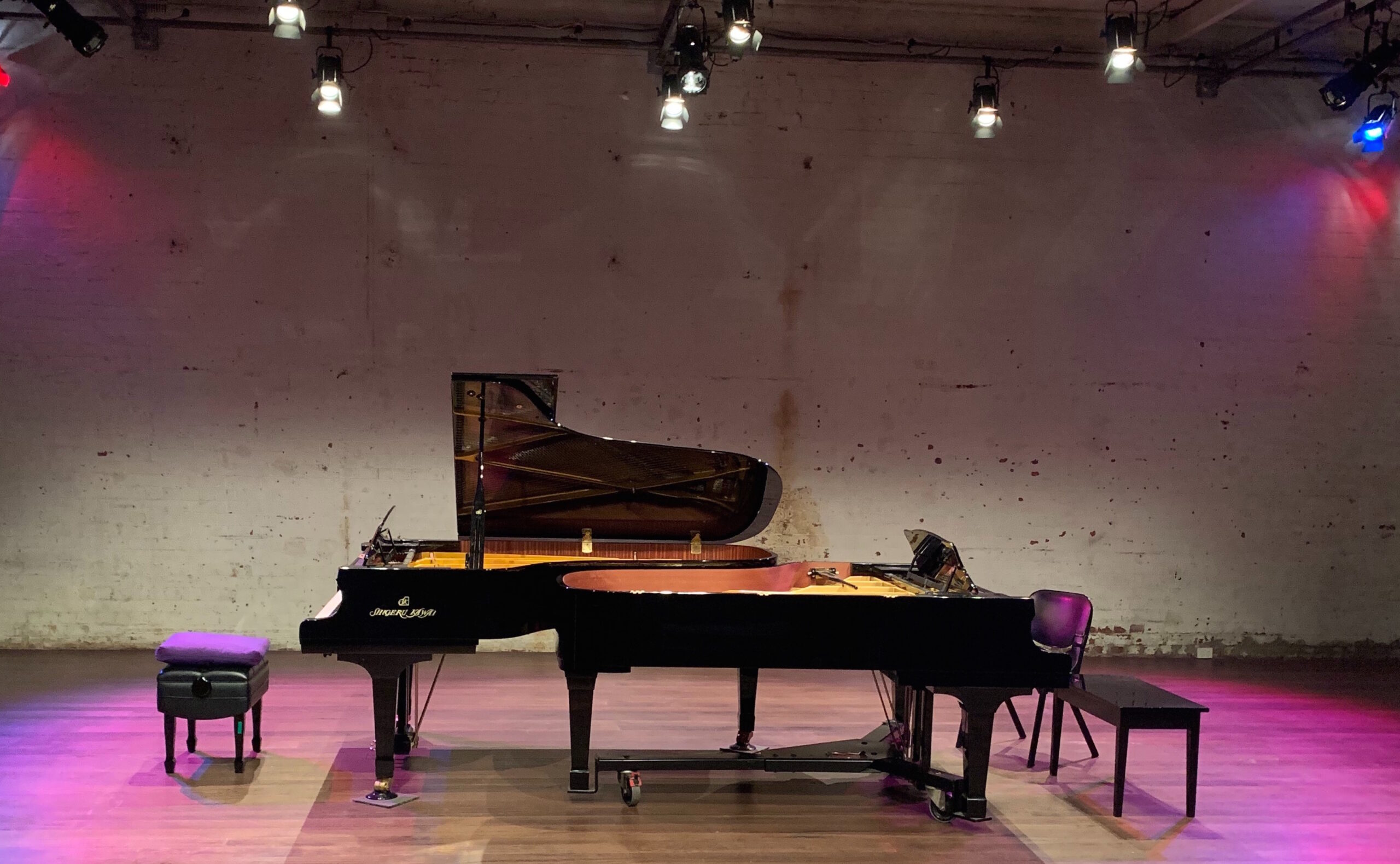
Festival director, Coady Green introduced “Mozart and Beethoven”, the sixth concert in a Chamber Music Festival presented at fortyfivedownstairs from May 6 to 18. Blessed by two pianos – the Kawai Shigeru grand provided by Kawai for the duration of the Festival – Green said he was determined to make good use of them. For this performance, they were set up facing each other. The vibe was cosy, not combative.
The program opened with Mozart’s Sonata for Two Pianos in D major, K. 448, written in 1781 at the age of aged 25 for the composer to play with the Austrian pianist, Josepha Auernhammer. Mozart wrote various works for four hands, including a concerto for two pianos, which he played with his talented sister, Nannerl. Interestingly, as Green pointed out in his introduction, this sonata was chosen for medical research on the therapeutic effects of music, especially Mozart’s music – the “Mozart effect”.
On this occasion Green teamed up with French pianist Kevin Tamanini at the Shigeru. It is a substantial work in three movements: a sparky Allegro, a tender Andante and a very bright scherzo. The two pianos were well matched, and Mozart has made a thoroughly equitable division of the themes and accompaniment. Much of the time it sounded like one highly resonant instrument, the novelty being the stereophonic effect of hearing a second version of each theme, and slight personal differences in their interpretation.
Two-piano works are rarely performed, and it was refreshing to hear a classic of the calibre of this work by Mozart performed by two very capable pianists.
After interval, Green was joined by Sophie Rowell (violin), Caroline Henbest (viola) and Josephine Vains (cello) to perform an arrangement of Beethoven’s third symphony, the Eroica, by Beethoven’s close friend, student and secretary, Ferdinand Ries. Given Ries’ close relationship to Beethoven, this arrangement must have had the composer’s implicit seal of approval.
Initially it felt strange to hear the opening of this monumental work played by such a small ensemble. It fell to the piano to supply the heft – which Green certainly managed with great assurance. The violin, viola and cello parts seemed to be largely as originally scored, but the combined effect was quite different, with a solo cello, for example, delivering the rousing theme in the first movement, and just one violin playing what seem (militarily) like the “scorched earth” passages that propel the symphony.
The piano took the lion’s share of the notes, though violinist Sophie Rowell probably had more exposed, virtuosic passages, which, in this slender arrangement, took on a far more soloistic character.
Stand-out moments included the comical interplay in the rondo, with violist Carolyn Henbest making the most of the viola’s mocking interjections; some sublime moments in the funeral march where the string parts floated, perfectly blended, persistently punctuated by the repeated piano figure; and the whole ensemble’s bravura playing in the final movement.
The chamber setting inevitably altered the tone of the music, but communicated – with energy, flair and sensitivity – the compelling beauty and depth of the original. There was the same sense of expectation at the start, and the sense that we were being transported as we were led through the development of this extraordinary work. There were, justifiably, whoops of joy when this riveting performance came to an end.
The beautiful ensemble playing by Rowell, Henbest and Vaines left this reviewer hoping there will be an opportunity to hear them play a string trio together.
_________________________________________________________
Sue Kaufmann attended “Mozart and Beethoven”, presented as part of the fortyfivedownstairs Chamber Music Festival on May 11, 2025.