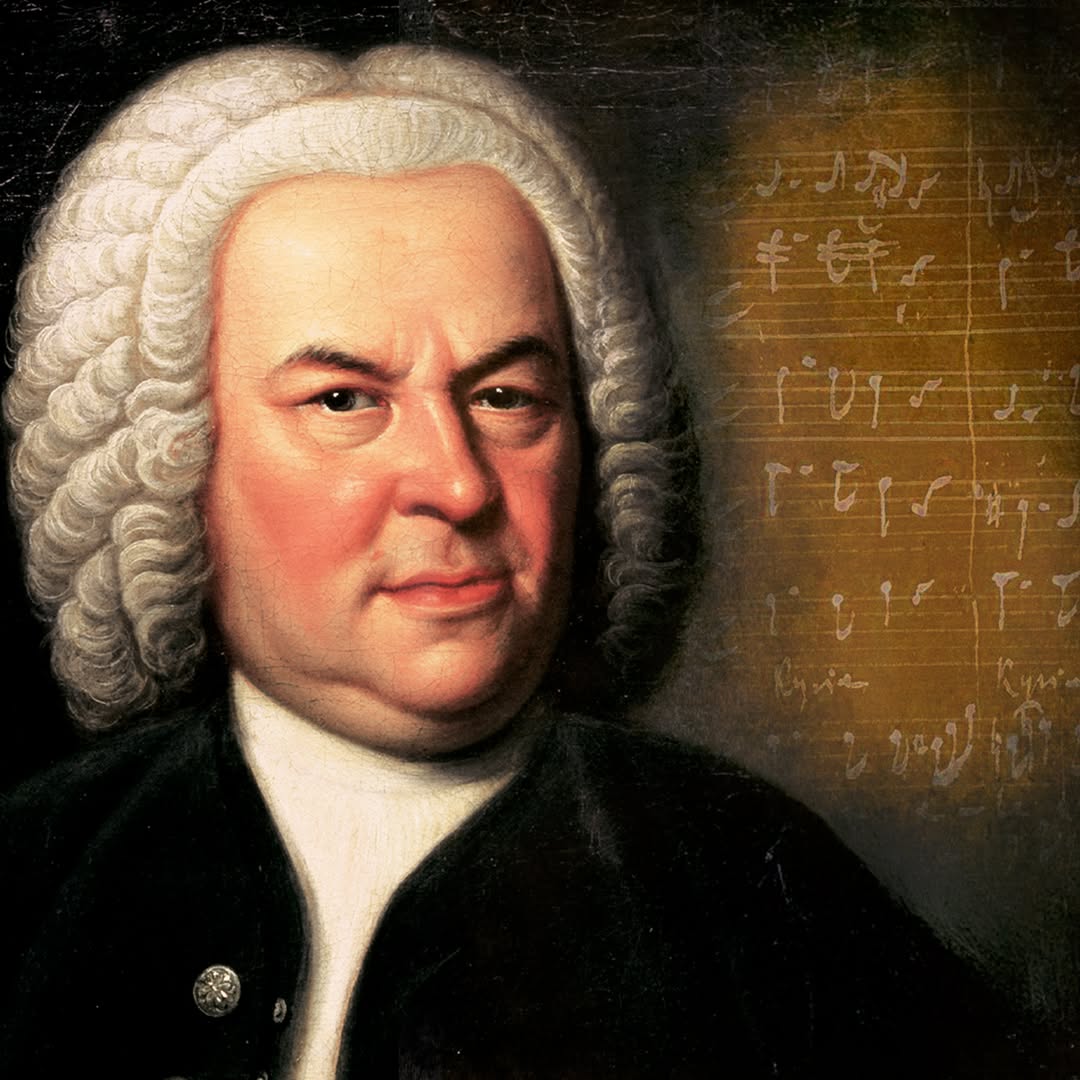
Johann Sebastian Bach’s Mass in B minor, BWV 232 is one of the monuments of western European music, as are indeed so many of Bach’s grand-scale works. There is debate over why Bach, a Lutheran, chose to write a complete setting of the Latin Mass. Given that a substantial amount of it is based on earlier works of his, perhaps he saw it is a great summary of his life’s work. Bach completed the Mass in in 1749 and died the following year in 1750.
For lovers of Bach’s music a performance of the B minor Mass is never to be missed. For choral singers it is a mountain to be scaled and as terrifying as it is exhilarating.
The Australian Chamber Choir (ACC) under the direction of Douglas Lawrence AM performed with the Melbourne Baroque Orchestra, an ensemble of historically informed players who gave the choir thoroughly professional and musical support. The choir itself sang flawlessly on pitch and on time, but there were some issues.
The ACC for this performance numbered 22 choristers with soloists drawn from their ranks. The choir members themselves have mixed experience, some of them with young voices that are yet to reach their full potential. The ACC is a gift to these young singers in nurturing their talent and providing a rich repertoire to explore. It is important to bear this in mind as the capacity of the soloists was a little uneven, particularly in the first half of the performance.
For this performance the Mass was divided into two parts. The first half closed with the appropriately spirited “Cum Sancto Spiritu”, a movement of glorious chaos, tossing fugue entries around with abandon. The tenors were a little airy on their fugue entries, but the trumpets in the orchestra were outstanding.
The Mass needed this burst of energy by this point for all the preceding movements seemed lost in the heavens. As soon as the instrumental interlude began in the opening “Kyrie eleison” the sound seemed to be coming from a distant source instead of the band right in front of us. You could see the wind players in action, but it was very hard to hear them.
The choir also got lost in an overall wall of sound up to the exhilarating “Cum Santo Spiritu”. Not being familiar with Scots Church as a concert venue, this was puzzling. In performance in the first half the singers were riveted on the director’s beat, their scores pulsing like white birds. Anyone who has sung the B minor Mass knows it is not for the faint-hearted, but faint they seemed.
At interval, I spoke with a couple of people who know Scots Church well and all agreed that the sound tends to carry directly upward, fittingly to the heavens, but not so effective for an audience.
The second half began with the “Credo in unum Deum” and suddenly everything had come alive, as it should, the Credo being central to Christian faith and to the Mass. Now the singers were looking past the director and out to the audience. Perhaps at half time encouragement was given to them to project with confidence so that their sound didn’t disappear upwards.
The three sections of the Credo “Et incarnates”, “Crucifixus” and “Et resurrexit” are some of the most impassioned music in the canon. Bach has written music of great drama using complex chromatics. The choir sang with fervour and with dramatic capacity, perhaps the highlight of the day.
The Mass rounds out with great exultations and moments of solemnity. The second half was a different performance to the first half and truly demonstrated what the ACC can achieve.
Image supplied.
______________________________________________
Nick Tolhurst reviewed “Bach B Minor Mass”, presented by the Australian Chamber Choir with the Melbourne Baroque Orchestra at Scots Church, Melbourne on March 22, 2026.